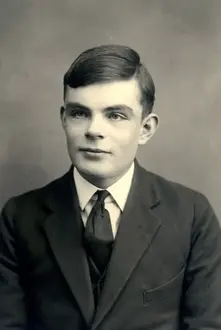
Alan Turing OBE FRS (23 June 1912 – 7 June 1954) is surely one of the most influential scientists of modern times leaving a legacy which we still benefit from today. He was an English mathematician, computer scientist, logician, cryptanalyst, philosopher and theoretical biologist. Turing was highly influential in the development of theoretical computer science, providing a formalisation of the concepts of algorithm and computation with the Turing machine, which can be considered a model of a general-purpose computer. He is widely considered to be the father of theoretical computer science and artificial intelligence.
His work was historic too, in that it played an important role in the Bletchley Park code breaking centre during the Second World War that enabled the Allies to defeat the Axis powers in many crucial engagements. After the war, Turing worked at the National Physical Laboratory, where he designed the Automatic Computing Engine. In 1948, Turing joined Max Newman’s Computing Machine Laboratory at the Victoria University of Manchester, where he helped develop the Manchester computers and became interested in mathematical biology. Turing was never fully recognised in Britain during his lifetime because much of his work was covered by the Official Secrets Act. Turing has an extensive legacy, including an annual award for computer science innovations. He appears on the current Bank of England £50 note and in a 2019 BBC series, as voted by the audience, he was named as the greatest person of the 20th century.
Alun Turing has been chosen to be included in this RIED Inspirational People page because of his work in computer science, artificial intelligence and interests in mathematical biology upon all of which the bio-inspired world of RIED would not have been imagined.